
R is for Robida
Week R | Monday | Le Sortie de l’opéra en l’an 2000

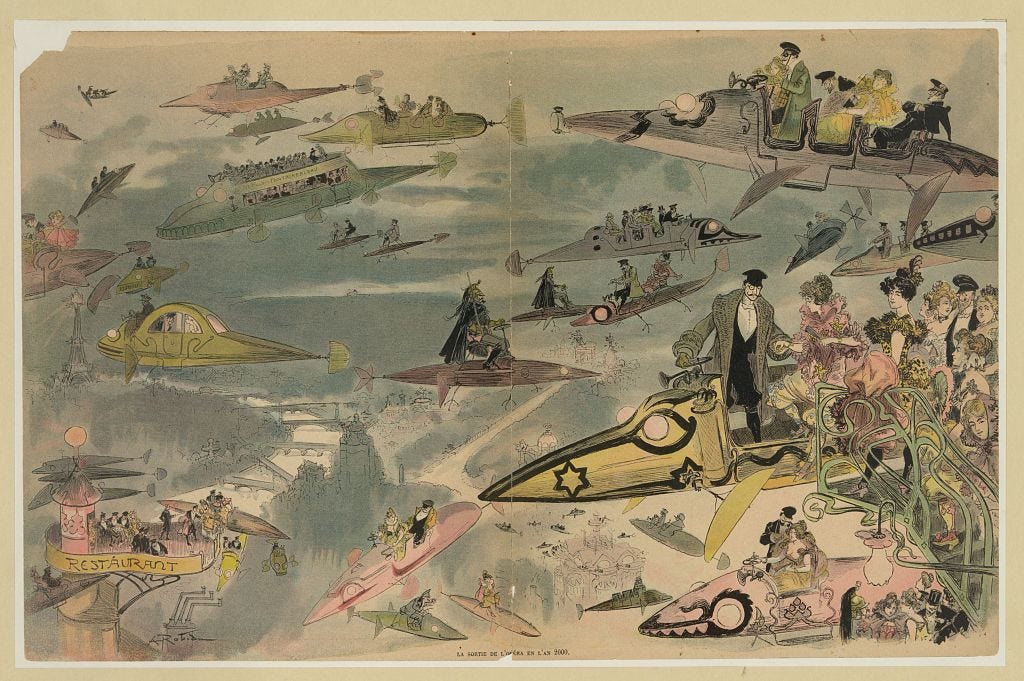
The original of this hand-painted lithograph, ‘Going to the opera in the year 2000’, is held in the Prints and Photographs Division of the USA’s Library of Congress. But it’s also catalogued by them online within Miscellaneous Items in High Demand, a category I find rather charming and must explore further. It would make a good title.
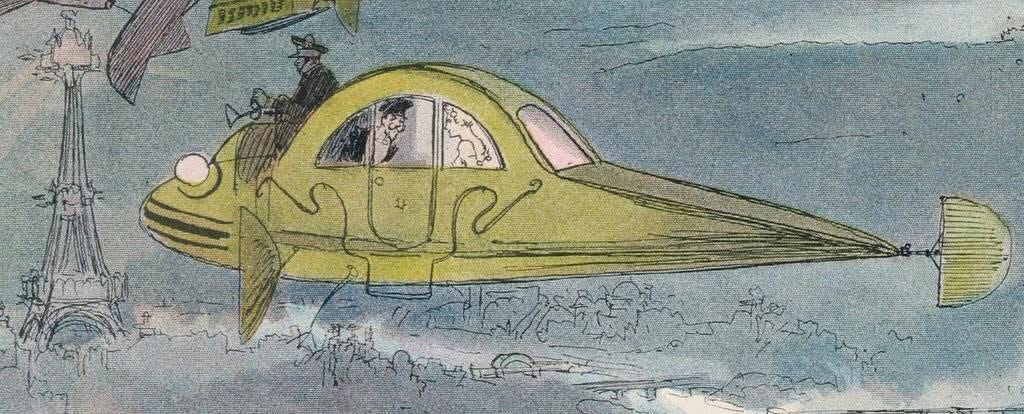
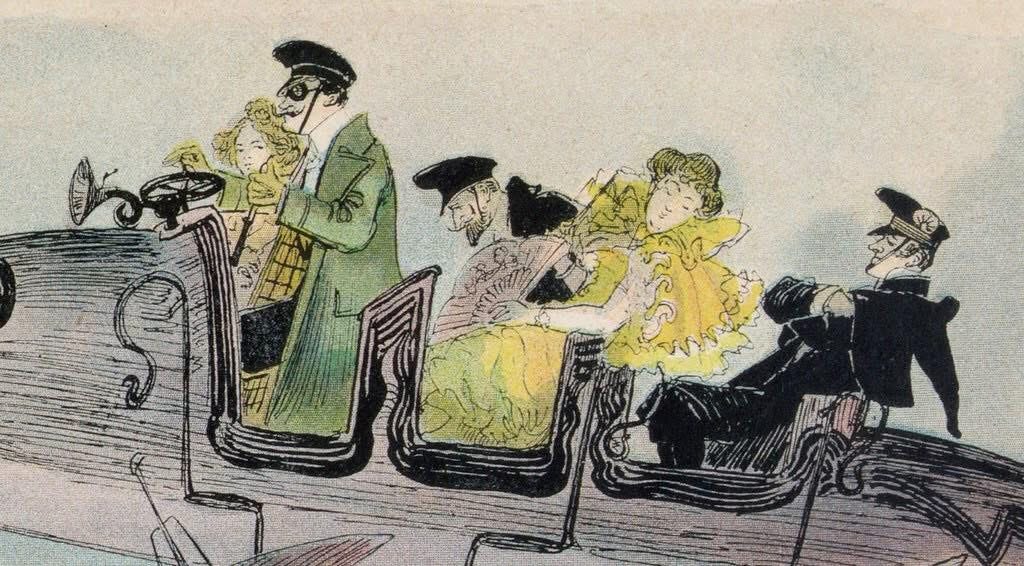
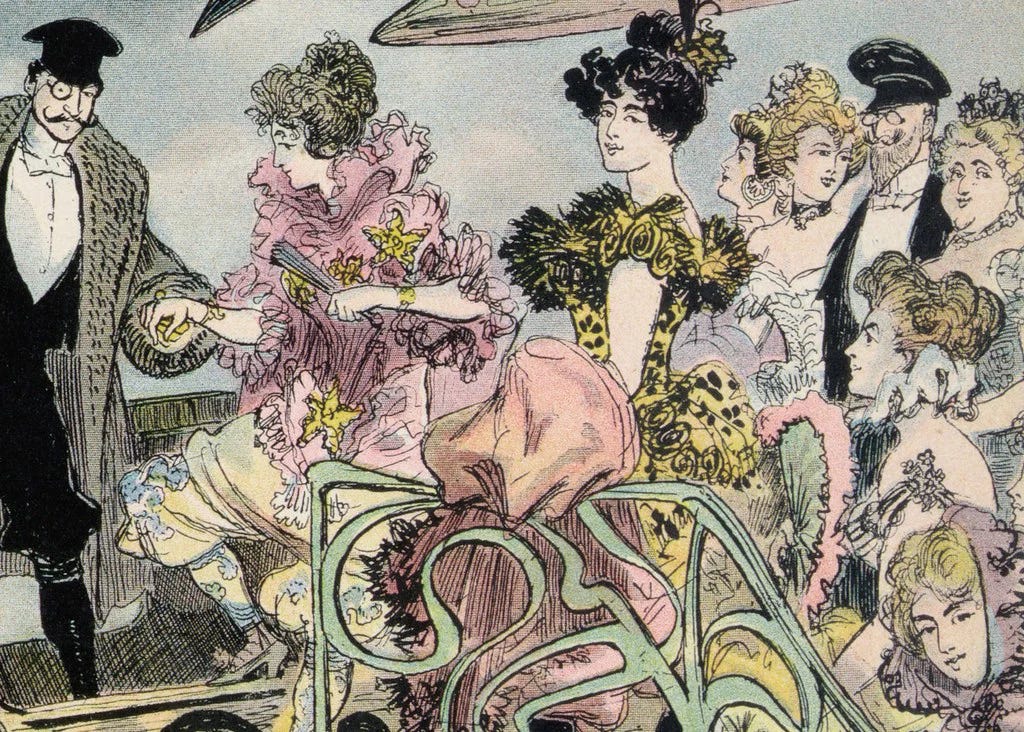
The print depicts air travel over Paris as people are leaving the Opera for the evening. There are buses and limousines, police are patrolling the skies, and women drive their own aircraft. It was of course visionary at the time it was first published (either 1882 or 1902, depending on who you believe – the presence of a modified Eiffel Tower suggests ‘circa 1900’ as being reasonable, for me) but it’s still futuristic now. Blade Runner promised us flying cars by 2019. Tut-tut humpf.
Albert Robida was a caricaturist, etcher, illustrator, lithographer, and writer. He was also the editor and publisher of La Caricature magazine for a dozen years. But above all he was a futurologist, an early pioneer of science fiction. He wrote an acclaimed trilogy of novels in which he imagined 20th-century life and its possible developments.
These were Le Vingtième Siècle (The Twentieth Century, 1883), La Guerre au vingtième siècle (War in the Twentieth Century, 1887), and Le Vingtième siècle. La vie électrique (The Twentieth Century. The Age of Electricity, 1890).
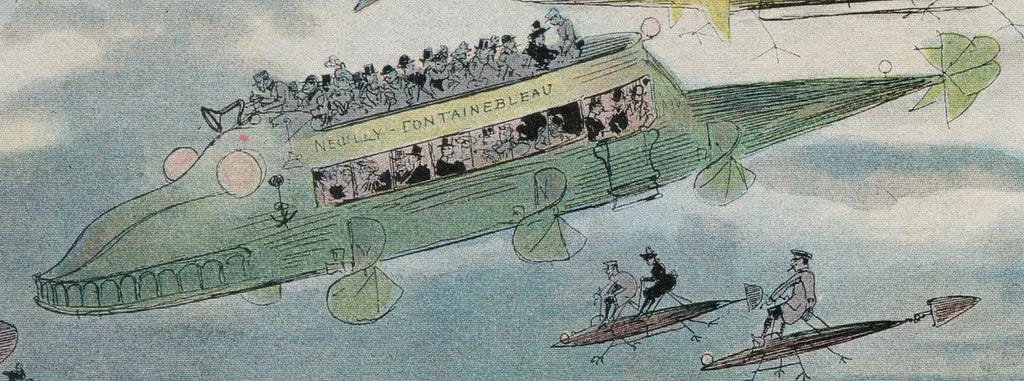
Robida correctly predicted many actual inventions in his ‘fiction’. Take his ‘téléphonoscope’, for example. Does a flat-screen TV showing news, courses, plays, events, and more 24-7 ring any bells with you?
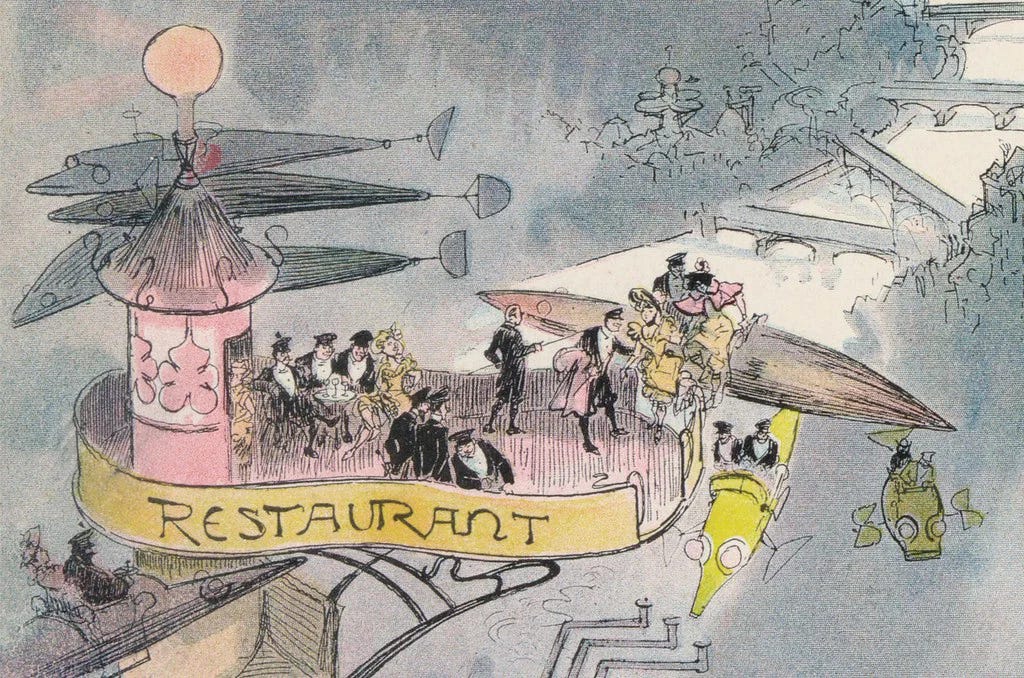
He wasn’t able to imagine technological ‘advances’ with occasional accuracy because he was a starry-eyed dreamer, at least by some accounts. He was sufficiently cynical to envisage some of the stupid or dangerous uses to which human ingenuity might be put. I wonder what he’d have made of nuclear power, facial recognition, or AI?
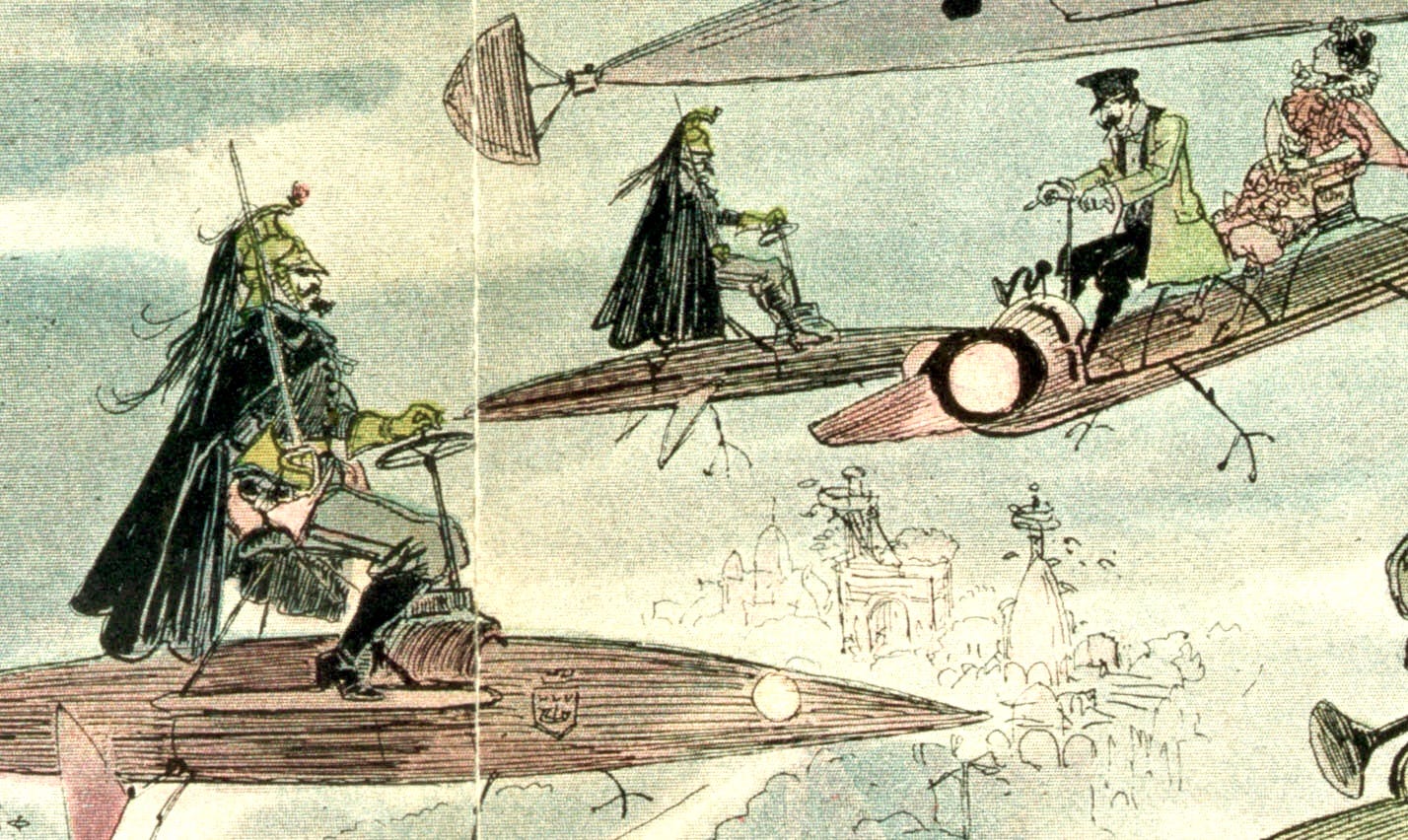
He wasn’t as well known as Jules Verne but he was nonetheless influential, and still is.
I can’t help wondering whether Miyazaki’s Howl’s Moving Castle had Robida’s work among its inspirations.
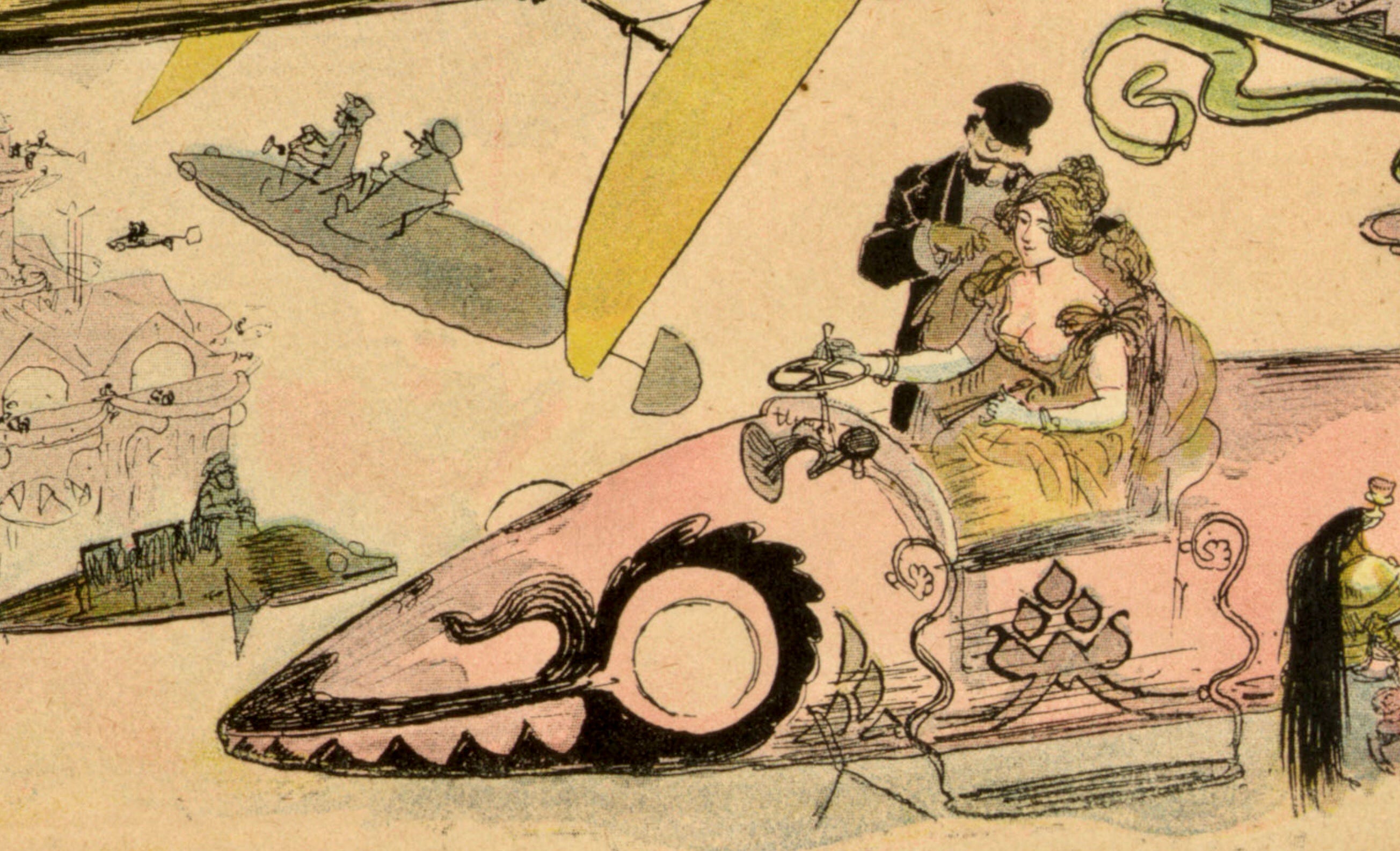
You can read more about Albert Robida and his accomplished children, and see more of his work, here.
This wonderful thanks for sharing. I actually have a hard time as an American right now looking at sites like the Library of Congress. I am concerned our administration in some way is extending themselves to all corners of our trusted institutions and history and wiping it clean. I hope someone within has the sense to save these items.